
200 Hour Online
Hatha & Vinyasa
Yoga Teacher Training Course

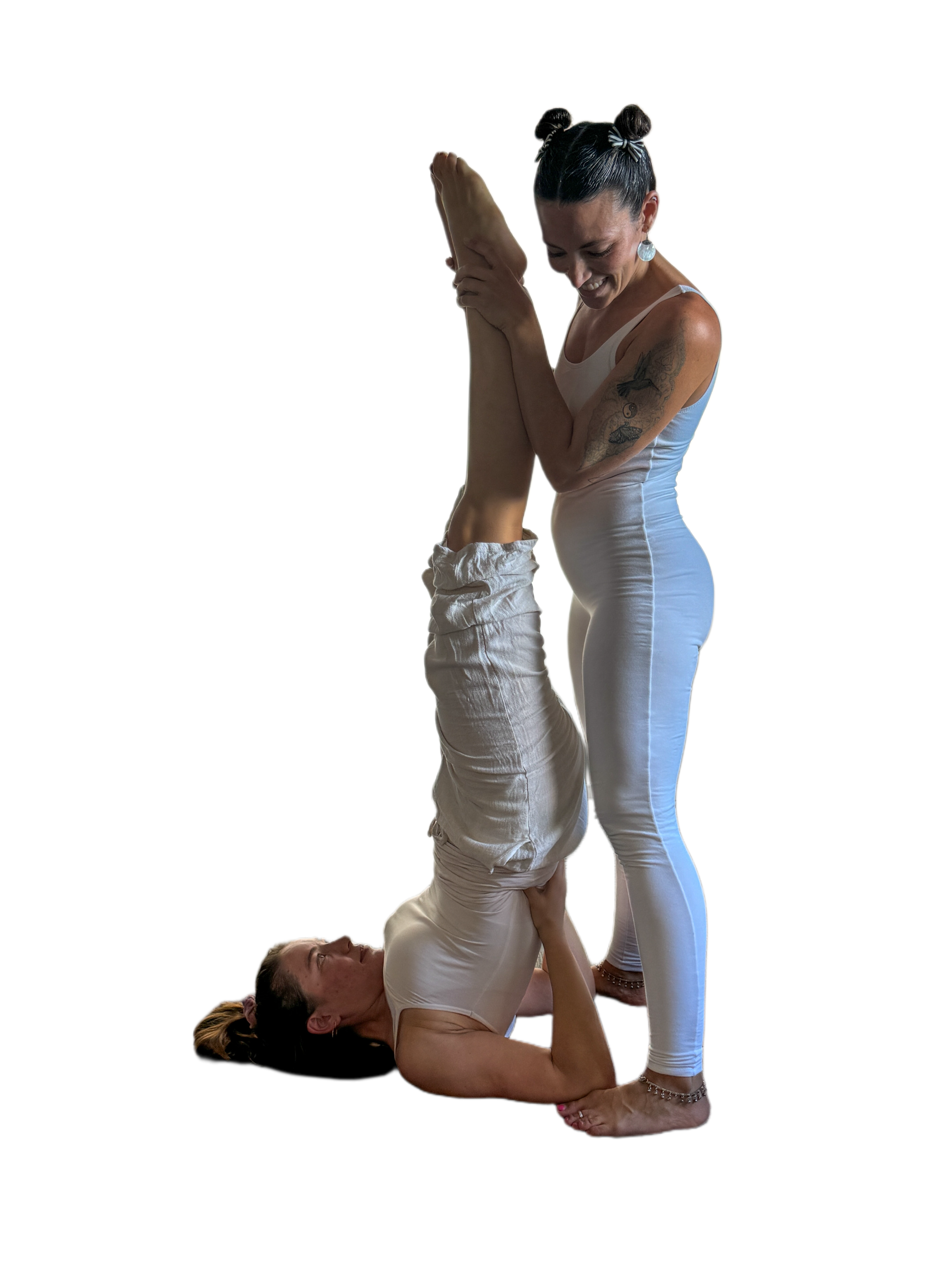
The training you need – Just one click away.
200 Hour Online Hatha & Vinyasa Yoga Teacher Training
It is the quality of our training and the dedication of our experienced teacher team which makes Gayatri special. The 20 years of experience offering yoga teacher training courses and the positive reviews we have received speak for themselves.
Get more information
There are many reasons why to choose our online training:
- If you need more time to learn and reflect
- If you feel discomfort being away from home
- If you can’t manage your family and the training at the same time
- If you have limited days off from work
- If you suffer from health problems
- If you have less budget to travel
- If you have difficulties learning under time pressure
If you wish to do your yoga teacher training at your own pace, or if any other of the above points should apply to you, then our online training would be an excellent option for you to become a Certified Hatha & Vinyasa Yoga Teacher.
FULL ONLINE 200 HOUR HATHA & VINYASA YOGA TEACHER TRAINING COURSE FOR 250€
If you are looking for a high qualitative and inexpensive Hatha & Vinyasa Yoga Teacher Training Course, here comes the solution. Our full online training follows the same syllabus and standards as all other teacher training courses we offer.
Our full online training follows the same syllabus and standards as our in-person courses, and after successful completion, you will receive your diploma as a Certified Hatha & Vinyasa Yoga Teacher, which allows you to teach and work worldwide.
Upgrade to Yoga Alliance Certification for 200€
If you would like your training to also meet the additional requirements for Yoga Alliance registration, you can choose to add the Yoga Alliance Upgrade. The Upgrade gives you additional live training and personalized support, including:
• Live Asanas Classes
• Private Q&A sessions with Aarti
• Practical teaching experience
• Direct review and assessment of your teaching and microlessons
Until December 2026, the live requirement is completed through the weekly Power Asanas classes. From 2027, these will be replaced by the new monthly live workshop format.
Upon completing the additional requirements, you will be eligible to register directly with Yoga Alliance as a 200-hour Registered Yoga Teacher (RYT 200).
The Yoga Alliance Upgrade is optional. We recommend it if you intend to teach professionally, work internationally, or would like the additional recognition and practical support that comes with completing the Yoga Alliance requirements.
If you are unsure whether the Upgrade is right for you, you can contact Aarti at aarti.gayatriyoga@gmail.com and she will be happy to explain what is involved.
Certification Details:
Once you have completed the online training, you will be fully certified as a CYT 200 / Certified Yoga Teacher, with our certificate you can work and teach worldwide. If you choose the Yoga Alliance upgrade, you can sign in with Yoga Alliance as a RYT 200 / Registered Yoga Teacher. Please note that it is not a must to register with Yoga Alliance.
Flexible Access:
– You will have 6 months of access to complete your online training at your own pace.
– Most students complete the course in 2 to 3 months.
Recommended Materials:
We recommend our E-Book: »The Yoga Teacher Training Manual»: This book is of great value also after finishing your online training with us. Price: 25€.
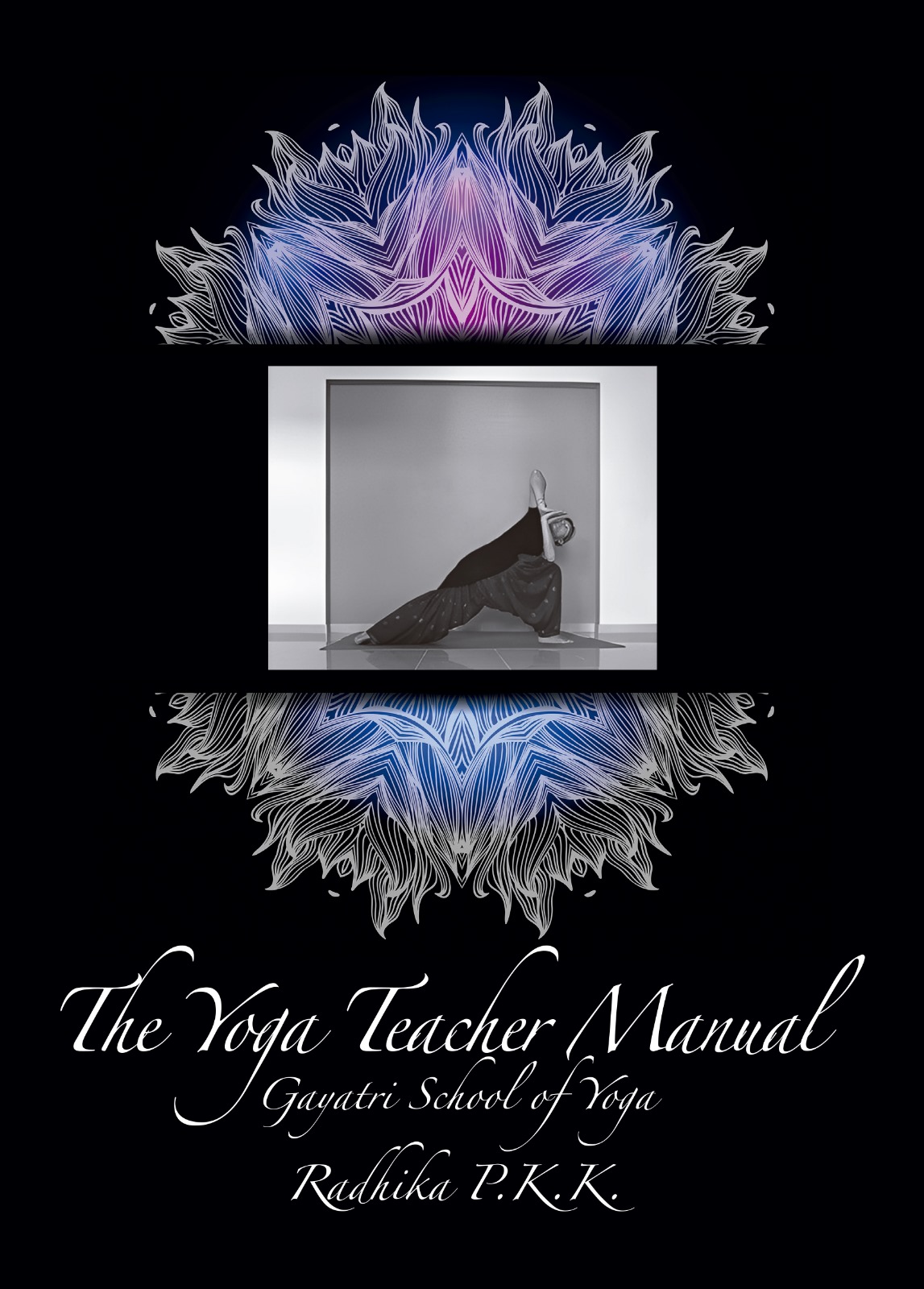
Discover The Yoga Teacher Manual by Radhika P.K.K.
A comprehensive guide for yoga teachers and practitioners, covering philosophy, asana, pranayama, anatomy and class structure.
If you feel called to deepen your knowledge and refine your teaching, this manual is for you.
I’m interested
OVERVIEW ASANA, PRANAYAMA AND BANDHA
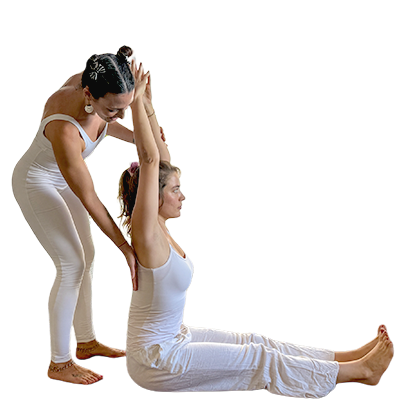
Surya and Chandra Namaskar
(Variations of Yoga Therapy, Hatha and Vinyasa Yoga)
- Meditation and Relaxation Asanas
- Asanas in Supine Position
- Asanas in Prone Position
- Asanas in Sitting Position
- Asanas in Standing Position
- Inverted Asanas
- Bandha
- Pranayama
- Sukhasana / Easy cross-legged pose
- Swastikasana / Auspicious pose
- Ardha Padmasana / Half lotus pose
- Padmasana / Lotus pose
- Dhyana Veerasana / Heroes meditation pose
- Vajrasana / Thunderbolt pose
- Shavasana / Corpse Pose
- Matsya Kridasana /Flapping fish pose
- Makarasana /Crocodile pose
- Balasana / Childs pose
- Ardha Utthanasana / One raised leg pose
- Utthanpadasana / Raised leg pose
- Ardha Chakrasana / Rotation with one leg
- Chakra Padasana / Leg rotation
- Ardha Pada Sanchalanasana / Cycling with one leg
- Pada Sanchalanasana / Cycling
- Halasana / Plough pose
- Druta Halasana / Dynamic Plough Pose
- Ardha Pawanmuktasana / Half wind release pose
- Pawanmuktasana / Wind release pose
- Jhulana Lurhakanasana / Rocking and Rolling
- Supta Udarakarshanasana / Sleeping abdominal stretch pose
- Shava Udarkarshanasana / Universal spinal twist
- Naukasana / Boat pose
- Ardha Chakrasana / Shoulder bridge pose
- Matsyasana / Fish pose
- Chakrasana / Wheel pose
- Saral Bhujangasana / The sphinx
- Sarpasana / Snake pose
- Bhujangasana / Cobra pose
- Tiryaka Bhujangasana / Twisting cobra pose
- Ardha Shalabhasana / Half locust pose
- Shalabhasana / Locust pose
- Dhanurasana / Bow
- Chakki Chalanasana / Churning the mill
- Nauka Sanchalanasana / Rowing the boat
- Setu Asana / Bridge pose
- Saithalyasana / Animal relaxation posture
- Paschimottanasana / Back stretching pose
- Ardha Paschimottanasana / Head to knee pose
- Meru Wakrasana / Spinal twist
- Ardha Matsyendrasana / Lord of the fishes pose
- Bhu Namanasana / Spinal twist prostration pos
- Parivritti Janu Asana / Spiralled head to knee pose
- erudandasana / Spinal column pose
- Gomukhasana / Cows face pose
- Marjari Asana / Cat stretch pose
- Vyaghrasana / Tiger pose
- Shashankasana / Hare pose
- Shashank Bhujangasana / Striking cobra pose
- Ashwa Sanchalanasana / Equestrian pose
- Ardha Chandrasana / Crescent moon pose
- Hanumanasana / The split
- Ardha Ushtrasana / Half camel pose
- Ushtrasana /Camel pose
- Supta Vajrasana / Sleeping thunderbolt pose
- Santolanasana / Balancing pose
- Ardha Pincha Mayurasana / Half feathered peacock pose
- Gupta Padmasana / Hidden lotus pose
- Kashtha Takshanasana / Chopping wood
- Namaskarasana / Salutation pose
- Udarakarshanasana / Abdominal stretch pose
- Kakasana / Crow pose
- Tadasana / Tree pose
- Hasta Utthanasana / Raised arms pose
- Padahastasana / Hand to toe pose
- Utkatasana / Chair pose
- Tiryaka Tadasana /Swaying palm tree pose
- Kati Chakrasana / Waist rotating pose
- Trikonasana I – II / Triangle pose
- Parivritti Trikonasana / Revolved triangle pose
- Virabhadrasana I – II – III / Warrior pose
- Eka Padasana / One foot pose
- Moordhasana / Crown based pose
- Sirsha Angusta Yogasana / Head to toes pose
- Eka Pada Pranamasana / One legged prayer pose
- Garudasana / Eagle pose
- Natarajasana / Lord Shivas pose
- Vipareeta Karani / Preparatory movement for shoulder stand
- Sarvangasana / Shoulder stand
- Padma Sarvangasana / Shoulder stand in lotus pose
- Sirshasana / Headstand
- Salamba Sirshasana / Supported headstand
- Jalandhara Bandha / Throat lock
- Uddiyana Bandha / Abdominal lock
- Moola Bandha / Pelvic lock
- Maha Bandha / The great lock
- Natural Breathing
- Abdominal Breathing
- Thoracic Breathing
- Clavicular Breathing
- Yogic Breathing
- Ujjayi / The psychic breath
- Bhramari / Humming bee breath
- Surya Bheda / Vitality stimulating breath
- Anuloma Viloma / Alternate nostril breathing
- Sheetali / Cooling breath
- Sheetkari / Hissing breath
- Bhastrika / Bellows breath
- Kapalbhati / Frontal brain cleansing breath
Get more information
SYLLABUS – ONLINE YOGA TEACHER TRAINING
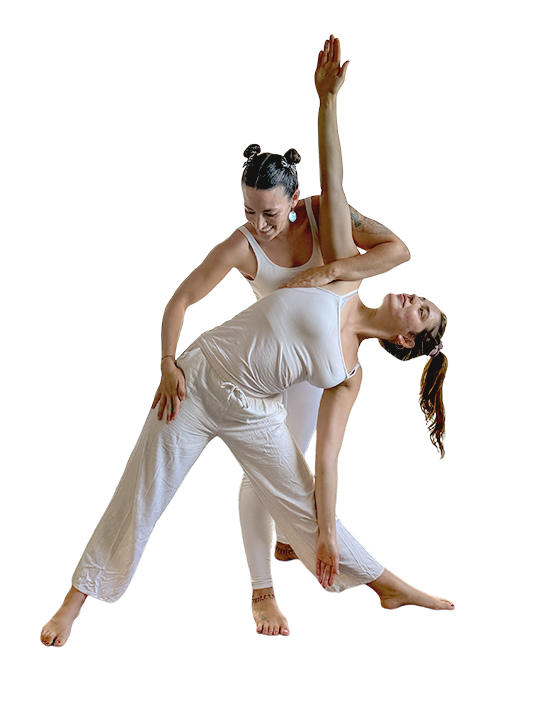
1. Philosophy and Yogic Lifestyle
Yogic Traditions & Philosophy
Learn about the philosophical aspects and classic yogic traditions, as for example:
– The meaning of Yoga, and how we can use this powerful tool for self-transformation.
– The four main spiritual paths: Karma / Bhakti / Raja / Jnana Yoga
– Hatha & Vinyasa Yoga Traditions
– Atman & Paramatman
– Mukti / Moksha
– Dharma
– Maya
– Dharma / Karma / Reincarnation
– OM & The Auspicious Number 108
– Kundalini Yoga
– Ethics and Code of Conduct for Yoga Teachers
Ashtanga Yoga & The Yoga Sutras of Patanjali
Study the eight path way, and the real meaning of the therm Ashtanga Yoga. This includes the study the Yamas, Niyamas, Asana, Pranayama, Pratyahara, Dharana, Dhyana and Samadhi. You will learn how to use Asana and Pranayama as two powerful tools to control the mind and emotions, and understand their benefit to strengthen the physical body and respiratory system, and how the eight path way affects body and mind.
You also will learn about Patanjali and the Yoga Sutras, and that all yoga styles which we practice today are based on this classic scriptures.
What is Asana according to Patanjali
Learn about the meaning of Asana. How to practice correctly with slow movement full control, accompanied with the correct breathing, and held steady for certain period of time, while concentrating the mind on infinity, as mentioned in the Yoga Sutras of Patanjali: ‘Steady and Comfortable Posture is Asana’. This way, Asanas become a tool for the mind and an active meditation.
Understand the 5 different stages of practicing Asana according to Ashtanga Yoga, and about the difference between beginner, restorative, intermediate (including the spiritual and physical awareness points), and advanced level of practicing Asanas.
The Sacred Books of Hinduism & Gods and Goddesses
In this topic we will give an overview on the most well-known gods and goddesses and explain the basics of the most important text books of India. Where this knowledge is coming from, who gave this knowledge, their meaning, and how the techniques of Yoga have their source in this universal knowledge.
Learn about the following gods & goddesses, maters, and well-known classic texts books:
– Vishnu & Lakshmi
– Shiva & Parvati & Durga
– Radha & Krishna
– Hanuman
– The 10 avataras of Vishnu
– Patanjali & Matsendranath
– The Vedas & The Upanishads,
– The Mahabharata & The Bhagavad Gita
– The Ramayana
– Hatha Yoga Pradipika & Tantras
2. Techniques, Training and Practice
The Safe Practice of Asana and Pranayama
Do’s and don’ts, props, adjustments and corrections will be used to learn how to reduce and avoid risk of injury. How to adapt postures according to the different needs and levels of students. Developing the correct language while guiding, taking care and correcting. You will learn how to guide safe into and out of asanas with slow movement and with full control, using the correct breathing. These techniques are used for beginner and intermediate students of Hatha and Vinyasa traditions.
Benefits and Contraindications of Asanas
Benefits and contraindications of all groups of asanas, and of every single asana in our teaching manual. You will then use this knowledge to prepare and presentat your own teaching lesson classes during the training.
This include the benefits and contraindications for more than 100 asanas and it’s variations and the following groups of asanas:
– Meditation & Relaxation Asanas
– Basic & Prep Movements
– Surya & Chandra Namaskara of Hatha Yoga
– Surya Namaskara A & B of Vinyasa Yoga
– Asanas in Vajrasana & Padmasana
– Forward & Backward Bending Asanas
– Asanas for Abdomen & Digestion
– Spinal Twisting & Standing Asanas
– Balancing & Inverted Asana
– Dynamic Movements
Pranayama - Mudra - Bandha
Learn how the practice of Pranayama, Bandhas and Mudras effects body, mind and the pranic body, and how to use these techniques to create harmony between Ida and Pingala Nadi, and their effect on body and mind according to Swara Yoga. You will understand why these techniques are important and how to use them to release tightness and to initiate relaxation of body and mind. The teachings will make you understand the different groups of Pranayama (heating, cooling, activating and calming), and how to use them according to each situation and student.
This includes the following practices:
Pranayama:
– Abdominal – Thoracic – Clavicular Breathing
– Yogic Breathing & Ujjayi
– Brahmari
– Surya & Chandra Bheda
– Nadi Shodhana & Anuloma Viloma
– Sheetali & Sheetkati
– Bhastrika & Kapalbhati
Bandhas: Learn about the meaning, benefits and contraindications of the Bandhas, and that they are powerful tools to awaken Kundalini Shakti, through the elevation of prana from the lower to the higher chakras. You will learn and understand about the relation and benefits for the Endocrine System, while practicing Bandhas.
– Moola & Uddiyana Bandha
– Jalandhara & Maha Bandha
Mudras: Get knowledge on the five groups of Mudras and learn a few classic hand and perineal mudras, and why they are such important gestures to linking our individual pranic force with the universal or cosmic force. You will learn, practice and understand about the meaning and benefits of different Mudras, and why they are essential for the flow of pranic energy within the pranic body or Pranamaya Kosha.
– Chin & Jnana Mudra
– Bhairava & Hridaya Mudra
– Nasagra & Ashwini Mudra
Structure of a Beginner Asana Class
Learn how to prepare and structure Beginner Hatha Yoga Classes.
This structure include the following parts:
– Mantra Chanting to start and finish the class
– Meditation & Pranayama
– Surya Namaskara & Asanas
– End Relaxation
Structure of an Intermediate Asana Class
Learn how to prepare and structure Yinyasa Yoga Theme Classes.
This structure include the following parts:
– Mantra Chanting to start and finish the class
– Meditation & Pranayama
– Surya Namaskara & Asanas
– End Relaxation
Teaching Lessons
After learning and preparing the structure of Beginner Hatha and Intermediate Yinyasa Yoga Classes, you will teach full lessons to the other students of the training and receive feedback.
Restorative Yoga
This lesson includes knowledge on how to structure and choose pranayamas and asanas for restoratorive yoga classes. We will also provide you with example classes for the following topics:
– Yoga and Menstruation
– Prenatal Yoga
– Yoga for Children
– Yoga for Seniors and Chair Yoga
– AyurYoga for Vata / Pitta / Kapha
– Restorative Yoga for Thyroid Disorders / Obesity / Arthritis / Asthma & Respiratory Disorders / Diabetes & Digestive Problems / Gynaecological Disorders & Menopause / HBP & Heart Disease / Back Pain & Stiffness / Anxiety & Depression.
The Meaning of Pranayama
We will study Prana, Pranayma and the Pranic Body. You will understand the meaning of the expantion of the vital force which keeps us alive, and that this force includes physical, mental, emotional, intellectual and spiritual aspects, which is needed to control. We teach you the 5. different aspects of Pranayama:
- Pooraka / Inhalation
- Rechaka / Exhalation
- Antar Kumbhaka / Internal breath retention
- Bahir Kumbhaka / External breath retention
- Kevaka Kumbhaka / Spontaneous breath retention
You will understand the versatility of Pranayama, and why these techniques are powerful tools for inducing a healthy life and for spiritual awakening, or awakening of Kundalini Shakti. This includes lessons on the pranic body and how to adjust pranayama in different ratios to students. You will also learn about the general guidelines of Pranayama, and the effect on the physical and subtle body, etc.
What is Meditation?
Learn about the versatility of Meditation, which provides understanding of the benefits of meditation as a powerful tool for inducing a healthy life, calmed mind and for spiritual awakening.
Understand the difference between Pratyahara, Dharana and Dhyana. This difference is important to understand to get the personal benefits while practicing the different stages and to visualize in which stage you are in your own practice of Meditation. You will learn how to teach and explain others the difference of these practices. Pratyahara or Yoga Nidra will help you to withdraw the senses from external world and prepare and stabilise Chitta (the mind) for Dharana (one pointed concentration), which will lead you to Dharana or Meditation. This will make you understand that you need to follow the stages of Ashtanga Yoga to reach Samadhi, the union between Atma (the Individual Soul) and Paramatma (the Universal Soul), which is the goal of yoga.
How to Meditate & How to get started
We will teach you how to get started with mediation and how to teach others. Structure and lessons for Jnana Yoga and Dhyana are given and cover the following points:
– Get started / Enjoy Meditation.
– Best time to meditate / Are you a morning or evening meditator?
– Posture / Different meditation Postures.
– Eyes / open and closed eyes meditation techniques.
– Focus the mind / How to stabilize the mind.
– The breath / Use the breath itself as a meditation or let it flow freely.
– Thoughts / Use the breath and Dharana to control the thoughts.
– Emotions / become aware of the body not on the story behind emotions.
– Length of the meditation / Start short and lengthen step by step.
– Place of the meditation / a space with positive and calmed energy.
Meditation Techniques
You will learn the following meditation techniques:
– Japa Meditation
– Chakra Meditation
– Breathing Meditation
– Meditation on OM / AUM
– Walking Meditation
– Kundalini Meditation
– Prana Meditation
– Buddhist Meditation
– Yoga Nidra …… and other techniques.
Mantras & Bhakti Yoga / In Person
Learn and practice the correct pronunciation and about the meaning and benefits of mantras, and why they are essential for the flow of pranic energy within the pranic body / Pranamaya Kosha. Mantras are vibration or Naad, which link our individual pranic force with the universal or cosmic force and that this vibration has healing qualities, boosting the nervous system and balance body and mind. You will use mantras to start and finish yoga classes to bring students on the same energetic level and to set a corresponding effect on body, mind and prana. We cover the following Mantras:
– Surya & Deva Sivananda Mantra
– Maha Mrityunjaya & Gayatri Mantra
– Jaya & Guru Vedanta Mantra
– Tara Mantra & Durga Mantra
– Devi & Govinda Mantra
– Prayer for Universal Peace & Mantras for Japa Meditation
Chakras - Koshas - Nadis - Marma Points
Study and understand the Koshas, Chakras, Nadis, Marma Points and Prana. The Chakras, their nature, localization points and corresponding nerve plexuses in the physical body. Our trainees will understand the meaning of prana, its interaction and effect on the Chakras and on Pranayama Kosha. Students will understand how to use corresponding yogic techniques to balance body and mind, bringing the pranic energy to a flow and storing it in the Chakras and Marma Points.
This include the three groups of Chakras (lower, middle and upper), Bindu and Sahasrara. There positive and negative characteristics, exact location and meaning, names and corresponding mantras and elements. The difference between Chakras and Marma Points, the number of Marma Points and Nadis in the body. The connection between the Chakras and the Endocrine System, and how to use Chakra Meditation to balance body and mind. We will study in detail Ida, Pingala and Sushumna Nadi and their meaning. We also will study the Koshas and how the 5 bodies function together forming an integral whole.
Ayurveda
Learn about the basics of Ayurveda, according to the samkhya philosophy and where it is coming from. Why Ayurveda, Tantra and Yoga are sister sciences and closely connected to each other, and the purpose of Ayurveda. Our Trainees will understand clearly the following topics:
– Ayurveda and the Human Potential
– The Gunas – Satva / Rajas / Tamas
– The Five Elements of Creation – Ether / Air / Fire / Water / Earth
– Ayurvedic Test
– The Doshas – Vata / Pitta / Kapha
– Specific Dosha Disorders
– Emotional Release
– Sattvic Diet
– Ayurvedic Diet
– Yoga and Ayurveda
– Easy Ayurvedic Remedies
Know about constitutional types, and learn about their own constitution, which will help to keep body and mind balanced, or restore balance if needed. Specific example classes for Vata, Pitta and Kapha are provided.
3. Anatomy and Physiology
The Skeleton
Learn about the body sctructure, tissues, organs, cells and the skeleton, bone, the pelvis, cartilage, the spine, ribs, joints, tendons and ligaments. This knowledge will help you to structure your restoratorive yoga classes and gives you an insight on the yogic point of view, suggested yoga techniques, beneficial foods and how yoga helps.
Joints
Learn and understand the different types and function of joints in the human body. The focus is held on synovial joints which are the most common joints. Students will understand the difference between; Ball and Socket Joints, Hinge Joints, Pivot or Swivel Joints, Plane or Gliding Joints, Ellipsoidal or Condyloid Joints, and Saddle Joints.
Muscular System
Learn about different muscle types, and of which tissue they are made. This include knowledge about: Voluntary or Skeleton Muscle, Involuntary or Smooth Muscle, and the Heart Muscle. Trainees will understand the difference between Isotonic and Isometric Movement. How they influence the muscle tension, circulatory and respiratory system, and which training action is involved in it. Trainees will learn about flexor and extensor muscles, and we will give an overview on the most important muscles in the arms, legs and torso. You will know about muscle tone in the form of hypertonic and hypertonic conditions, and their effect on the body while exercising. Examples of flexion, extension, supination, pronation, abduction, adduction, external rotation, internal rotation are given. Understand the difference between hypo extension and hyper extension, how to adjust asanas to the needs of your future students and how to avoid injuries. You will learn about the relationship to other systems in the body and the yogic few of anatomy and how yoga helps, suggested yoga techniques, negative influences and beneficial foods.
The Nervous System
Topics of this lesson are the spinal cord and the brain, including the basics of their function. You will understand how the body’s control and communication system works, and about the relation to other bodily systems as for example the endocrine system and connection to our glands and chakras, and look at the yogic few of anatomy, which includes: how yoga helps, suggested yoga techniques, negative influences and beneficial foods.
The Circulatory, Endocrine and Digestive Systems
Learn about the basics of the following systems:
– The Circulatory System: The pulmonary and systemic circulation, the heart, arteries, veins and capillaries.
– The Endocrine System: The different glands, and their function.
How the glands are connected to nerve plexuses and the chakras. This includes an overview on the following glands: The pituitary and pineal Gland, the hypothalamus, the thyroid, thymus and adrenal glands, the metabolism, male and female hormones.
– The Digestive System: The basic knowledge about the location and function of the different organs which form the digestive system: Stomach, liver, gall bladder, pancreas, small and large intestine.
* This topic includes the yogic few of anatomy in relation to these systems: How yoga helps, suggested yoga techniques, negative influences and beneficial foods.
The Respiratory System
Learn about the basic knowledge of the airways, which includes the nasal cavity, mucous membrane, the pharynx, larynx, trachea, and bronchi. The process of breathing will be explained, including the functioning of the diaphragm and the intercostal muscles to make the expansion and contraction of the rib-cage possible. You will learn about the gas exchange of oxygen and carbon dioxide. This topic includes the yogic few of anatomy in relation to pranayama and the respiratory system and includes: How yoga helps, suggested yoga techniques, negative influences and beneficial foods.
FAQ
Online Training
DOES AN ONLINE YOGA TEACHER TRAINING REALLY WORK?
Yes, it does. The quality of our training is amazingly high and you have the control over time and space. The online training gives you flexibility to work in your own pace, especially if you are not able to travel, have no holidays for a one-month residential training, or if you have difficulties to study under pressure. With our online training you can repeat the videos as often as you want. Learning online offers you flexibility and convenience.
WHEN DOES THE TRAINING START AND END?
You can start as soon as you have registered for the training, and have than full 6 months time to finish the course. In case you are not able to finish on time, the curse can be lenghened for 60€ per month.
WILL I BE WELL PREPARED AND READY TO TEACH AFTER COMPLETING THE ONLINE TRAINING?
After completing our training, you will have a very strong foundation and you will be prepared to teach straight away. You can work full time as a yoga teacher, offer workshops and retreats. You could even open your own yoga studio.
HOW LONG DOES IT USUALLY TAKE TO COMPLETE THE ONLINE TRAINING?
Usually, students complete the course in 2 to 4 months.
HOW MUCH EXPERIENCE DO I NEED TO JOIN THE YOGA TEACHER TRAINING?
Our Yoga Teacher Training is suitable for yoga practitioners from all levels of practice; beginners, intermediate and advanced. We encourage students from all backgrounds with different levels of experience to join the course, even if you don’t want to teach others. Our training is for all students which want to learn and deepen their knowledge.
WHAT STYLE OF YOGA WILL I LEARN?
We follow the classic Indian traditions of Hatha and Vinyasa Yoga which include; Sivananda and Satyananda Yoga, Yin and Iyengar Yoga, and Vinyasa Flow Yoga. Yoga is a vast subject area with many traditions and styles, our course includes the study of; Ashtanga, Raja, Bhakti, Jnana, Kriya and Karma Yoga. Our course is based on a systematic and progressive learning approach designed to get trainees teaching safely and effectively.
WILL I LEARN HOW TO STRUCTURE YOGA CLASSES?
Yes, you will. You will learn from the really beginning, how to structure and guide beginner hatha yoga, and intermediate vinyasa yoga classes. We will increase the teaching skills little by little, this way you will gain knowledge and most important, self-confidence.
WILL I BE QUALIFIED TO TEACH WHEN I GRADUATE AND AT WHAT LEVEL?
Our aim is to ensure that our graduated trainees can lead high standard and professional beginner and intermediate yoga classes with confidence, ease and safety. Most graduates without prior teaching experience, start teaching yoga immediately after completing the training. Trainees who are 100% committed during the course and afterwards with their own practice have a very high success rate as teachers.
IS GAYATRI SCHOOL OF YOGA REGISTERED BY YOGA ALLIANCE?
Our school and all teachers are registered by Yoga Alliance.
CAN I SIGN IN WITH YOGA ALLIANCE AFTER COMPLETING THE TRAINING?
After successful completion of the course, you will receive the diploma as an CYT 200 – Certified Yoga Teacher. With our certification you can work worldwide. If you wish to register with Yoga Alliance as an RYT 200 – Registered Yoga Teacher, you would need to include all needed live classes to your online training. You can book online live classes with Aarti our Online Lead Trainer for an additional charge. Please note; to register with Yoga Alliance as a teacher is not a must and optional. Important is that you do a teacher training with a registered school, as it gives you the guarantee that the school and teachers follow the necessary knowledge and standards to offer you a high qualitative training.
I JUST WANT TO JOIN THE COURSE TO DEEPEN MY PRACTICE AND KNOWLEDGE, IS THAT OKAY?
Many students join the course with this objective in mind and they invariably get as much out of the course as those who have enrolled with the main objective of becoming yoga teachers. We accept all students, also if they are absolute beginners and don’t want to teach yoga. We strongly believe that Yoga is a personal practice, and our training is for all those who want to deepen the yogic knowledge. All you need to join our online training is a real interest and love towards yoga.
IS THERE AN EXAM AT THE END?
To ensure students are meeting the learning objectives of the training a theoretical exam is included at the end of the training. The final exam consists of quiz questions according all the different themes you have learned throughout the training.
I AM NOT VERY FLEXIBLE, IS THAT A PROBLEM?
All of us have some limitations and challenges, this is normal. We all need to accept this fact. According this, a flexible mind is much more important than a flexible body.
Just adjust the practice to your needs, enjoy your practice and do what you can.
IS THERE AN AGE LIMIT FOR PARTICIPATION IN THIS COURSE?
No, there is no age limit to join our training. You should be physically fit and have the wish to learn a lot about yoga.
CAN I JOIN THIS TRAINING IF I AM PREGNANT?
If you adjust a few of the listed asanas, avoid positions which lead to pressure on your belly, and listen to your body in each moment, no problem at all. Just take care of yourself!
WHAT PROPS DO I NEED THROUGHOUT THE TRAINING?
You need a yoga mat, a meditation pillow, a blanket, 2 yoga blocks and a yoga belt.
WHAT DEVICE IS REQUIRED FOR THIS ONLINE TRAINING?
You need computer with a good internet connection.
CAN I BOOK THIS COURSE DIRECTLY WITH THE SCHOOL?
To avoid additional booking fees and taxes to the Teachable platform where our course is hosted, you can book this training with us directly. Once your payment has arrived our account, (usually within 3 business days), we will send you a code to access the Teachable platform for free. For further information please contact us via email.
Get more information
Fill out the form
We’ll be happy to process your request — just fill out the form and we’ll get back to you as soon as possible.
Live Classes & What To Do After Your Teacher Training?
If you want to book online live classes, or if you just finished your first Yoga Teacher Training, please note that this is just the beginning of your journey as a yogi or yogini. Now, you may be wondering - what comes next? Perhaps you’re considering a Restorative or Advanced Yoga Teacher Training, or maybe you’re feeling unsure about the best steps to take to deepen your practice and teaching skills. What ever you are looking for, we are here to support you on your way. Aarti is our Online Lead Trainer and happy to give you guidance on your journey.

Your Mentor Beyond
At Gayatri Yoga, we want to support you every step of the way. Our lead online trainer, Aarti, is not only a dedicated and experienced teacher but also a Gayatri Yoga graduate who understands the path you’re walking. She is part of the Gayatri Yoga online training program, providing guidance and support to students after their Gayatri experience.

Asana Classes
Join Aarti’s energizing and transformative asanas classes. This all-levels classes focuses on building strength, flexibility, and creativity through diverse, element-themed flows designed to inspire and challenge you - whether you're a beginner seeking guidance or an experienced practitioner looking for new inspiration.

Stay Tuned
- Develop your skills as a teacher through expert guidance.
- Build strength and confidence in your practice with creative, accessible flows.
- Discover sequences you can incorporate into your own classes.
- Connect with a supportive community of fellow graduates.
- Benefit from Aarti’s experience as a Gayatri Yoga graduate and teacher who understands your journey.
If you’re looking for guidance or simply want to stay inspired and connected, reach out to us via email.
We are here to support and help you on your continuing yoga journey!
Contact: gayatri.yoga.fuerte@
All Yoga Training, Yoga East & West, Book Yoga Retreats and Book Retreats has listed Gayatri Yoga Tenerife as one of the 10 best Yoga Teacher Training Programs Worldwide and in Europe.
gayatri.yoga.fuerte@gmail.com

YOGA ALLIANCE
